

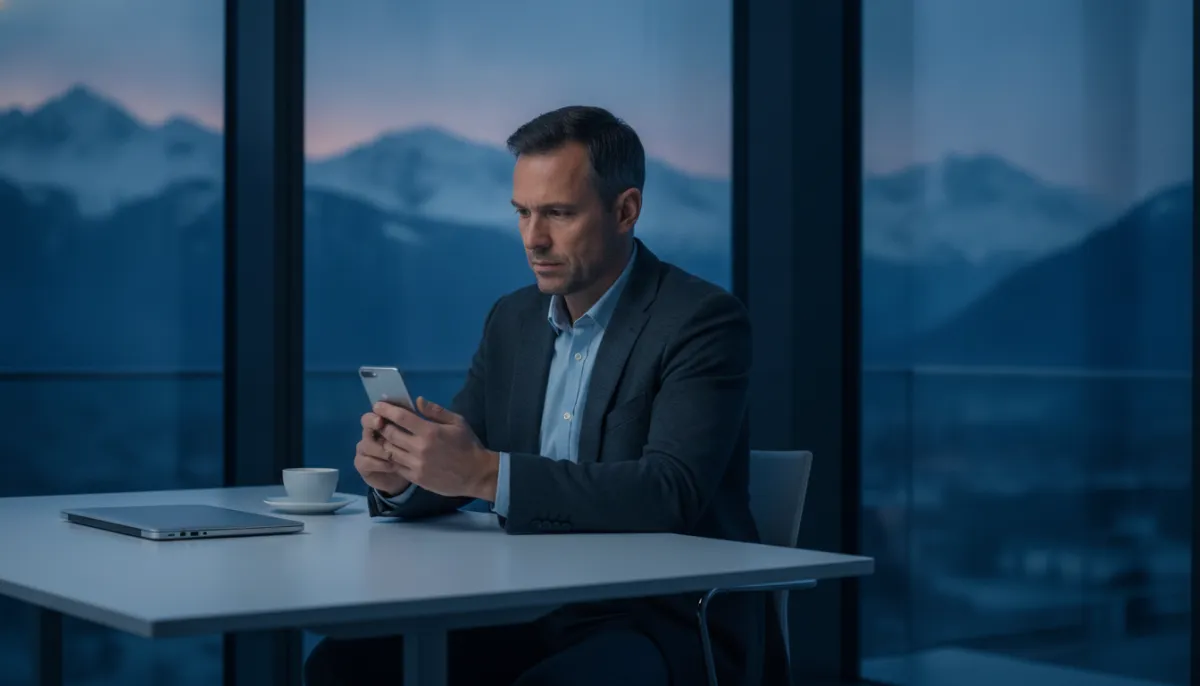
If you run a small or medium business in Switzerland, you've probably noticed something: phishing emails don't look like scams anymore. No more broken German, no more obvious red flags. That's because attackers are now using AI tools to write convincing messages, clone voices, and even generate fake video calls. This isn't a future threat — it's happening right now, and SMEs are a favourite target because they often have fewer defences than large corporations.
This is the first in an ongoing series where we'll keep an eye on emerging IT threats and tell you, in plain language, what needs attention right now. No jargon, no scare tactics — just practical steps you can take today.
Why AI Has Changed the Threat Landscape
Traditional cybersecurity advice told employees to watch for spelling mistakes or strange sender addresses. That advice is now outdated. AI-generated phishing emails can mimic the exact tone of a colleague or supplier. Voice-cloning tools can recreate a CEO's voice well enough to trick an employee into transferring money. Attackers also use automated scanning tools powered by AI to find unpatched websites and exposed servers faster than ever before.
For business owners, this means the old "it won't happen to us" mindset is riskier than ever. Small businesses are often seen as easier entry points — sometimes used as a stepping stone to reach larger partners or clients.
What to Do Today
- Enable two-factor authentication (2FA) on every account that supports it — email, banking, cloud storage, Microsoft 365. This single step blocks a huge share of account takeovers, even if a password is stolen.
- Verify unusual payment or data requests by phone, using a number you already have on file — not one provided in the email or message itself.
- Check that your website and server software is up to date. Outdated plugins, CMS versions, or server software are one of the most common entry points for automated attacks.
- Review who has admin access to your website, email system, and cloud accounts. Remove access for former employees or unused accounts immediately.
- Back up your data and test that the backup actually restores properly. Ransomware attacks are still common, and a working backup is often the difference between a bad day and a business-ending event.
A Simple Habit Worth Building
Set a recurring 15-minute slot once a month to review access lists, check for software updates, and confirm backups are running. It sounds basic, but most breaches we hear about trace back to something simple that was overlooked — not a sophisticated hack.
Where to Get Help
Not every business has an in-house IT team to monitor this constantly, and that's completely normal. This is exactly the kind of groundwork that Flitz.ai, together with The Mejlerö Company, helps Swiss businesses handle — from endpoint protection and two-factor authentication setup to Microsoft 365 administration and network security checks. If you want a second pair of eyes on your current setup, a free network analysis and a free one-hour consultation are available to help you see where the gaps are.
Beyond security basics, this is also where automation comes in. Many of the manual processes businesses rely on — user onboarding, device management, routine IT checks — can be streamlined so your team spends less time on repetitive tasks and more time on actual work. Flitz.ai is built around that idea: combining reliable Swiss IT support with automation so businesses run smoother and safer, without needing a full internal IT department.
We'll Keep Watching
AI-enabled hacking, automated vulnerability scanning, and social engineering are now a permanent part of doing business online. We'll continue tracking what's changing in this space and reporting back with clear, actionable steps — because staying safe shouldn't require a cybersecurity degree, just a bit of regular attention.
 Switzerland.